
Tria Technologies accelerates time to market with launch of new OSM-based development platform for carrier board design
New OSM-SB-EP5 platform helps engineering teams evaluate interfaces, validate architectures and create early prototypes, providing a foundation for application-specific carrier board development
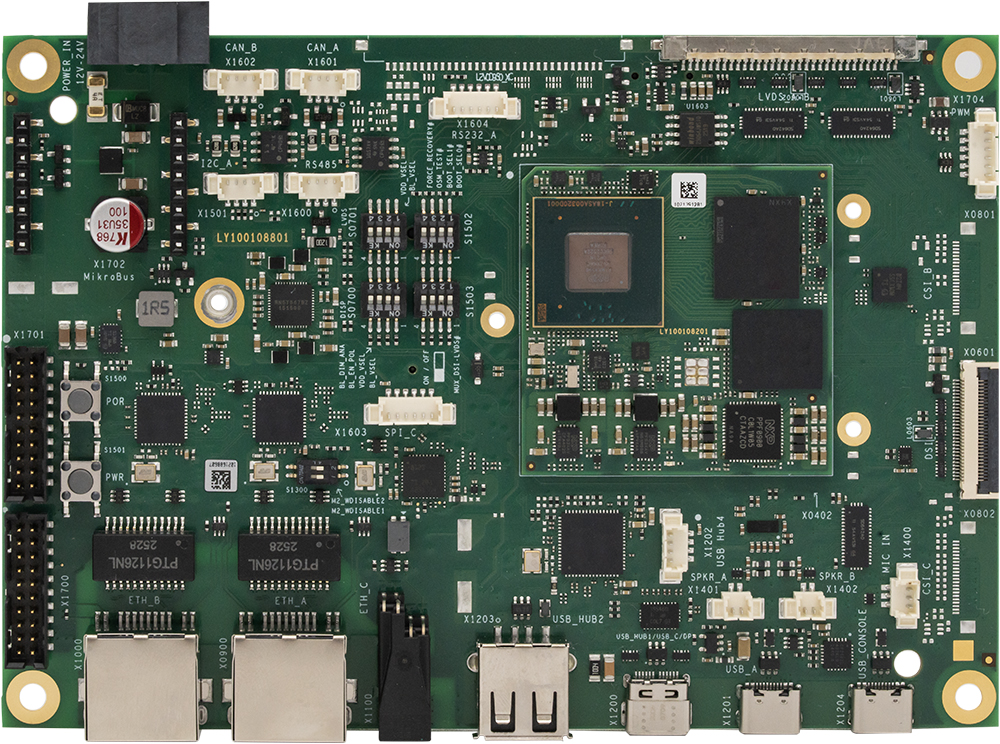
MUNICH, GERMANY – November 11, 2026 –The Tria OSM-SB-EP5, a ready-to-use development and evaluation platform for OSM-based embedded systems, is now available and will be exhibited for the first time at electronica 2026, in Hall B5, Stand 103.
Designed for evaluation, validation and prototyping by Tria Technologies, an Avnet company specialising in embedded compute modules, the platform gives engineering teams immediate access to key interfaces and expansion options so they can assess system architectures, verify application requirements and reduce project risk while accelerating the path from concept to production.
The OSM-SB-EP5 is intended for teams building embedded products around the OSM standard who need a practical and faster route from concept to production-ready design. Before an application-specific carrier board is available, engineers can use the platform to test interfaces, assess connectivity requirements, create working proof-of-concepts and begin software development within a common platform for hardware and software activities. OSM brings the standardisation and flexibility of Computer-On-Module (COM) and System-On-Module (SOM) solutions to smaller and higher volume embedded products, where traditional connector-based modules are too large or expensive. It’s compact and cost-effective design, makes OSM well suited for industrial IoT, edge AI, robotics and embedded vision applications.
Flexibility is central to the platform. Integrated interfaces include Gigabit Ethernet, USB, CAN FD, RS-485, MIPI CSI-2 camera connectivity and display interfaces. An M.2 expansion slot also enables developers to evaluate wireless technologies including Wi-Fi, Bluetooth and cellular solutions. This enables teams to compare communication technologies and validate application-specific connectivity requirements within a single development environment.