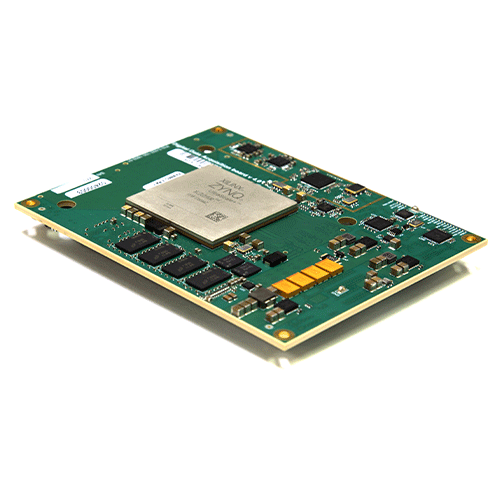


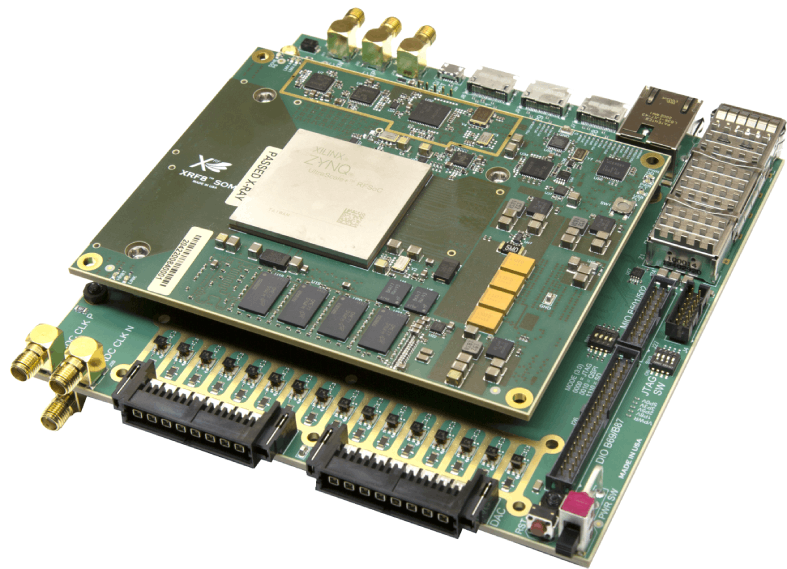


Tria Technologies XRF™ RFSoC System-on-Modules deliver professional grade solutions that meet the demands of phased array radar, mmWave beamforming, 5G massive MIMO and quantum computing.
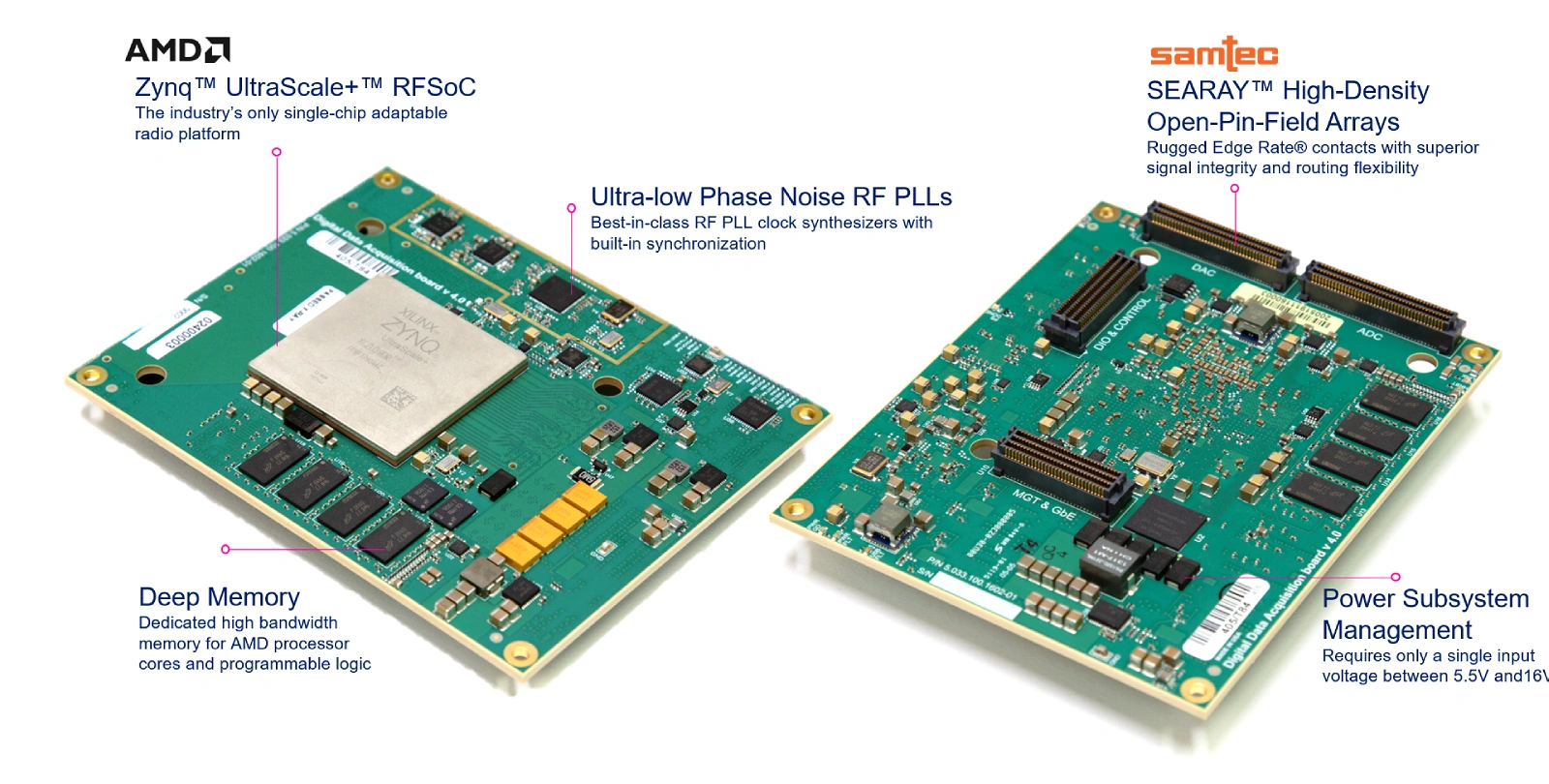
Designed for integration into deployed wideband RF systems demanding small footprint, low power, and real-time processing, XRF modules feature the AMD Zynq™ UltraScale+™ RFSoC with up to 16 RF-ADC and 16 RF-DAC channels and up to 6GHz analog bandwidth.
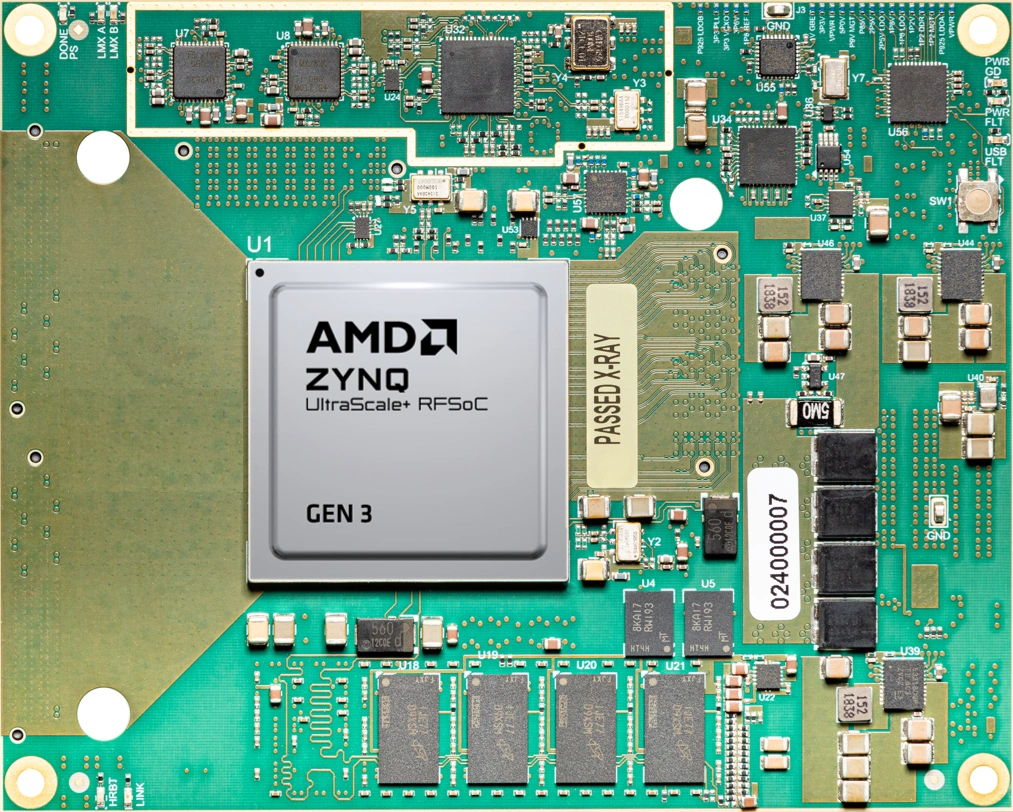
The Tria XRF8 features the AMD Zynq® UltraScale+™ RFSoC Gen3 ZU47DR, with 8 RF-ADC, 8 RF-DAC channels and 6 GHz RF bandwidth. Modules can be ordered with the ZU48DR RFSoC to enable 8x soft-decision forward error correction (SD-FEC) units.
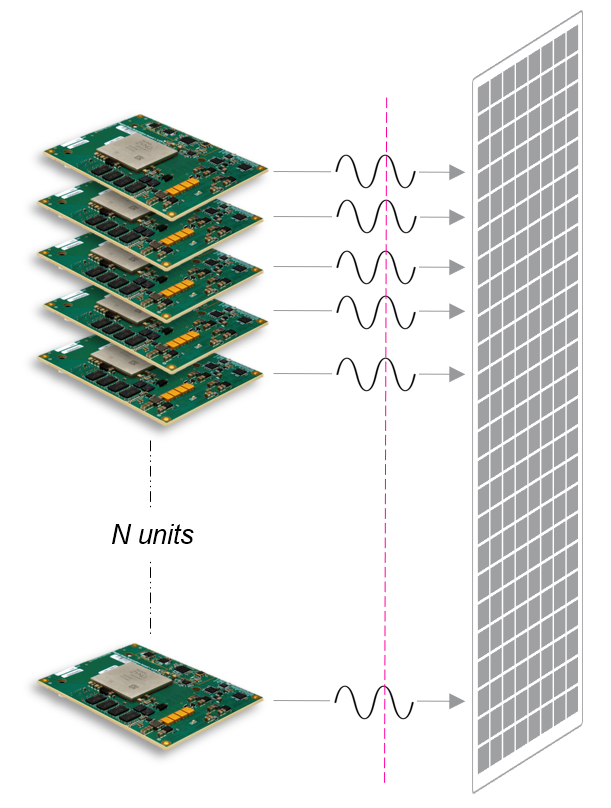
The Tria XRF16 features the AMD Zynq® UltraScale+™ RFSoC Gen3 ZU49DR, with 16 RF-ADC, 16 RF-DAC channels, and 6 GHz RF bandwidth. High channel density combined with the lowest latency digital interface makes this module ideal for large phase array applications.
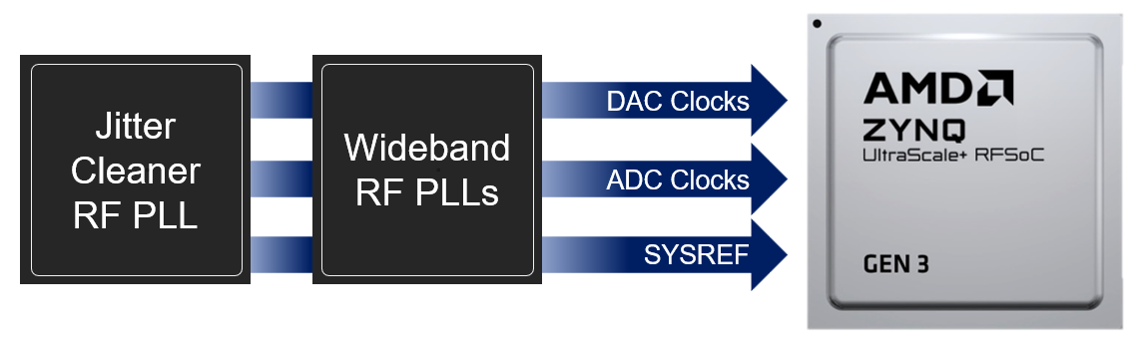
Maximizing the fidelity of AMD RFSoC giga-sample data converters requires precision clocking. XRF modules incorporate a cascade of best-in-class RF PLL clock synthesizers to offer programmability, ultra-low phase noise, and built-in synchronization.
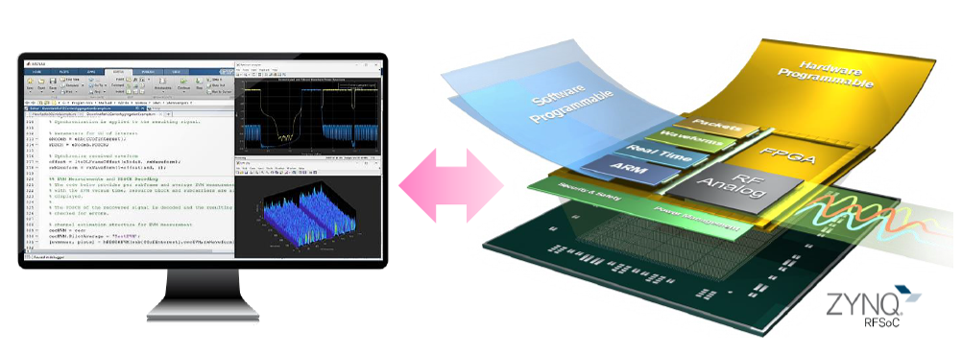
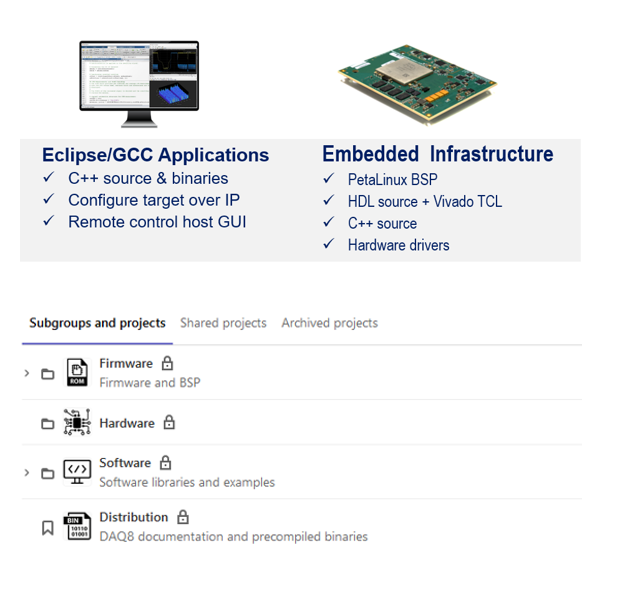
Rated for industrial temperature ranges, XRF modules are designed to reduce integration complexities. Evaluation and prototype can begin day one, using XRF firmware and software to configure the AMD RFSoC data converters, stream waveforms, and automate testing.
All RF signals are routed differentially with matched length and phase, including device flight times, to faithfully preserve analog signal quality of the AMD RFSoC data converters. High performance PCB materials provide controlled impedances to minimize signal reflection and insertion loss.
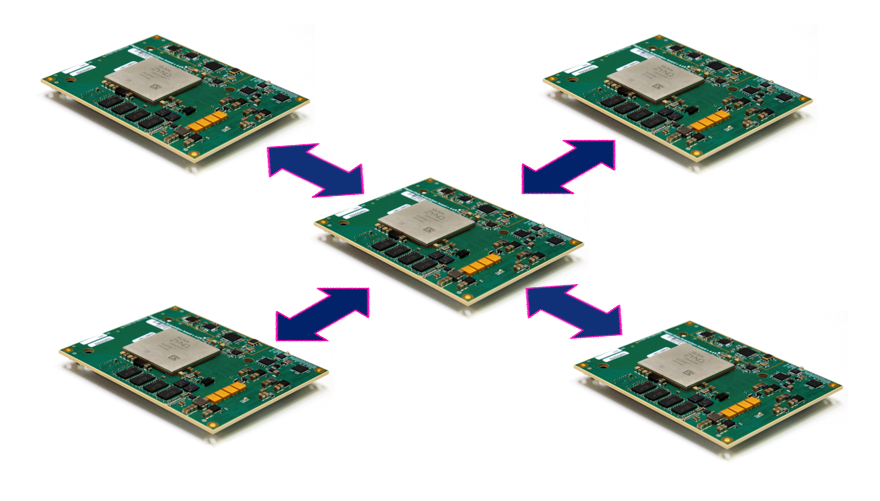
XRF modules present all 16 AMD GTY high-speed serial transceivers for high-bandwidth digital exchange with peers, including a custom implementation of AMD Aurora LogiCORE™ IP for low overhead, full-duplex serial communication.
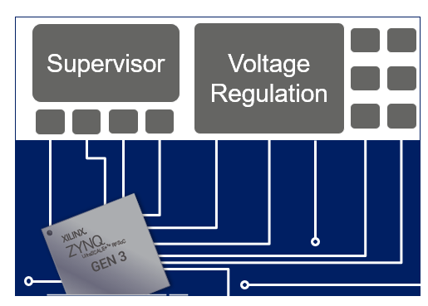
Complex SoCs require sophisticated power sequencing, regulation and management. XRF modules remove this complexity from your system integration, requiring only a single input voltage between 5.5V and16V. Voltage regulation and thermal monitoring occur in real-time, orchestrated by software, firmware, and linux drivers to maintain system health.
Combine a production ready XRF module with an XRF Carrier Card and Avalon™ software suite to jumpstart proof-of-concept and application development. Then deploy your system with the same XRF module used for proof-of-concept. Example code and tutorials demonstrate AMD RFSoC multi-tile sync (multi-converter sync) and multi-board synchronized analog capture.
Start software and firmware development with our standard XRF Carrier card. Develop your application-specific carrier using our CAD source files as a baseline for customization.
Designed and manufactured in the United States of America, available worldwide.
We can support you with:
Let us know about your product or your challenge and our team will get in touch to discuss how we can help.
Let's TalkFor security purposes, please solve this simple puzzle to verify you are human before sending an OTP.
Your privacy is important to us.
We use cookies to enhance your experience when visiting our websites: performance cookies show us how you use this website, functional cookies remember your preferences and targeting cookies help us to share content relevant to you. Select "Accept all" for giving your consent to all cookies, select "Cookie settings" for managing the different cookies or select "Reject all" for using only strictly necessary cookies. You can change your cookie settings at any time by clicking on the cookie settings link on the website.